Oct. 19 – Dr. Christopher DiCarlo – “Building a God – The Ethics of Artificial Intelligence and the Race to Control It”
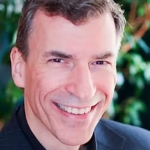 Dr. Christopher DiCarlo is a philosopher, educator, and author. He is the Principal and Founder
of Critical Thinking Solutions, a consulting business for individuals, corporations, and not-for-
profits in both the private and public sectors. He currently holds the position of Senior Advisor at
Convergence Analysis, an international organization focusing on AI Risk and Governance.
Dr. DiCarlo is also the Ethics Chair for the Canadian Mental Health Association
(Waterloo/Wellington). He often teaches at Toronto Metropolitan University and is a past
Visiting Research Scholar at Harvard University. Dr. DiCarlo has won several awards including
TV Ontario’s Big Ideas Best Lecturer in Ontario Award and Canada’s Humanist of the Year.
Building a God – The Ethics of Artificial Intelligence and the Race to Control It.
AI technologies have advanced so rapidly in the last several years that we are almost out of time
to regulate, legislate, control, contain, or even stop the potential negative effects of such
emerging technologies. In this lecture, Dr. DiCarlo will talk about three things. First, the basics
of Artificial Intelligence, its key terms, concepts, and issues. Second, a look at some of the
promising benefits and potential harms that such new technologies will bring to humanity. And
third, what we all can do to help mitigate the risks of AI.
Oct. 26 – Ivan Semeniuk – “Canada’s Next Chapter in Space”
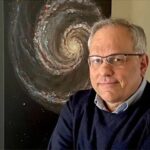 Ivan Semeniuk is a journalist and broadcaster who has spent the past three decades chronicling
humanity’s exploration of the universe. As The Globe and Mail’s national science reporter, he
informs readers across Canada with his coverage of topics that range from particle physics to the
most pressing issues related to the environment, technology and human health. A former editor
with Nature and New Scientist, he is also known for his television work, most recently as the
writer and host of Unsolved Universe, currently airing on TVO. Over the years, Ivan’s work has
garnered several awards including the Royal Canadian Institute's Sandford Fleming Medal for
contributions to the public understanding of science.
Canada’s Next Chapter in Space
Nearly 65 years after the launch of Alouette, the first Canadian satellite, and 25 years since
Canadarm 2 was installed on the International Space Station, the country's space sector is
entering a new and diverse era. Thanks to emerging technologies, new applications and a shift in
geopolitical realities, space has returned as a strategic and economic priority for Canada. Jeremy
Hanen's historic flight around the moon renewed public interest in spaceflight. Find out how a
combination of public and private efforts are working in less visible ways to transform Canada's
role in space.
Nov. 2 – Dr. Bill Timmins – “The Manhattan Project: The Real Story of the Development of the World’s First Atomic Bomb”
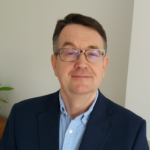
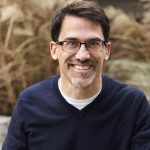
Brian is the Executive Director of Encounter World Religions. His career started in strategy consulting and venture capital before he discovered a passion for learning about the fascinating world of religion.
For twenty years, he has studied numerous traditions, fostered relationships with religious leaders and communities, and taken thousands of people annually to places of worship. In addition to this experiential education, Brian has a PhD in religion and politics from the University of Toronto.
Given his deep familiarity with ethno-religious communities, Brian has been invited to speak in a range of work environments from health care and education to policing in both Canada and the USA. He speaks on religious diversity, on our misunderstandings regarding religion, and offers Beyond Diversity talks that actually educate staff about different traditions to create religious literacy in the workplace and make religiously committed employees feel seen and valued.
American Exceptionalism – The Fascinating Interplay Between Religion and Politics in the US.
Nov. 16 – David Cravit – “Super Aging: Getting Older Without Getting Old”

David Cravit has over 30 years’ experience in advertising, marketing and consulting in both Canada and the USA. He’s participated at the most senior levels in the creation and placement of over $5 billion worth of media advertising.
He has been a guest on numerous radio and TV shows, frequent speaker to consumer and business audiences, and contributor to professional journals.
He’s now focused on tracking the reinvention of aging, led by the Baby Boomers. It’s the most significant and far-reaching trend in the world, touching every aspect of society – health, money, jobs, education, the consumer marketplace, and even sex.
Cravit’s first book was “The New Old,” (October, 2008, ECW Press) detailing exactly how the Boomers are completely revolutionizing the entire process of aging – and what the implications are for businesses, government, and society as a whole. His second book,“Beyond Age Rage” (April, 2012, Bastian Books), describes the apparent “war of the generations” – Boomers vs. Millennials – and shows boomers and seniors are already solving it.
Super Aging: Getting Older Without Getting Old
Welcome to the dazzling new world of SuperAging, where everything you’ve been taught about aging is challenged. Getting older does not need to mean the end of accomplishment and growth. For SuperAgers, the period after age sixty-five can be one of the most productive and fulfilling times of life.
SuperAging is already a reality for millions. But the science, business, and culture of aging have changed at such a rapid pace that they can be hard to keep up with. That’s where authors David Cravit and Larry Wolf can help. They’ve broken SuperAging down into seven simple components—Attitude, Awareness, Activity, Autonomy, Achievement, Attachment, and Avoidance—and in this groundbreaking book, they show how you can put these forces to work in your own life. From taking control of your health and health care to revolutionary ways of thinking about retirement, money, housing, and even relationships, you’ll discover how to make your seventies, eighties, nineties, and beyond some of the best years of your life. Why settle for getting old when you can thrive?
Nov. 23 – Dr. Adam Chapnick – “Canada’s Security in the World”
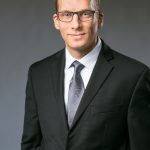 Adam Chapnick is a professor of defence studies at the Royal Military College of Canada (RMC). He is located in Toronto, where he also serves as the deputy director of education at the Canadian Forces College.
He holds a BA (Honours) from Trent University, an MA in International Affairs from the Norman Paterson School of International Affairs at Carleton University, and a PhD in History from the University of Toronto. He joined RMC in 2006 and currently teaches courses in Canadian foreign policy and strategic decision-making at the federal level. He also supervises theses on Canadian foreign and public policy and plays a leading role in drafting and implementing the College’s teaching and learning vision and strategies.
Outside of the college, he lectures about Canadian politics and international security across the greater Toronto community.
Canada’s Security in the World