Feb. 23 Jean Teillet – “Louis Riel’s People, the Métis Nation”
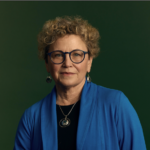 Jean Teillet, IPC, OMN, MSC, (BFA, LLB, LLM)
Jean is an artist, author, public speaker, women’s rights advocate and former Indigenous rights
lawyer, treaty negotiator and litigator. Her popular history, The North-West is Our Mother: The
Story of Louis Riel’s People, the Métis Nation was one of the Globe & Mail’s top 100 books of
2019 and won the Carol Shield’s and Manitoba Day awards. Jean has many awards including the
highest honour of her people-the Order of the Métis Nation; the highest honour of the
Canadian Indigenous Bar Association-Indigenous Peoples Counsel; a Meritorious Service Cross
from Canada; three honorary doctorates (University of Guelph, Windsor University and Law
Society of Ontario); and is an honorary lifetime member of the Association of Ontario Midwives.
Jean is Red River Métis, a member of the Manitoba Métis Federation and the great grandniece
of Louis Riel.
Louis Riel’s People, the Métis Nation – Jean Teillet is the great grandniece of Louis Riel. In 2019 Harper Collins published her popular history of the Métis Nation. Jean will speak about how she came to write the book and the story of her family’s involvement in the history of the Métis Nation. The story is a fascinating dive into how one small Indigenous Nation profoundly changed the course of Canada’s history.
Mar. 2 Ross King – “Michelangelo and the Sistine Chapel“
 Ross King is the author of numerous books on Italian and French art and history, including Brunelleschi’s Dome, Michelangelo and the Pope’s Ceiling and, most recently, The Shortest History of Italy. He has lectured across Europe and North America, and worked as a consultant and speaker on many film and television productions, including Ken Burns’ 2024 miniseries on Leonardo da Vinci.
Michelangelo and the Sistine Chapel – In 1508, Pope Julius II – known because of his military expeditions as the ‘Warrior Pope’ – commissioned Michelangelo to fresco the vault of the Sistine Chapel. Michelangelo had very limited experience of the physically and technically difficult technique of fresco, much less on the underside of a 12,000-square-foot surface. His reputation had been made in sculpture, with works such as the Pietà and the David, rather than in paint. This illustrated lecture examines the circumstances surrounding Michelangelo’s commission and how, in the four years between 1508 and 1512, he worked on his immense fresco in direct competition with Raphael, his younger and prodigiously talented contemporary, who was working on his own frescoes a few steps away in the Papal Apartments.
Mar. 9 Dr. Neta Gordon – “Crime, War and Hollywood – How Detective Fiction was Invented”
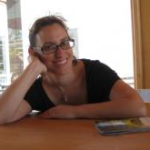 Dr. Neta Gordon wrote her dissertation on Canadian women writing genealogical narratives, and has published on SKY Lee, Ann-Marie MacDonald, and Barbara Gowdy’s work within this context. She has researched contemporary Canadian literature about the Great War, culminating in Catching the Torch: Contemporary Canadian Literary Literary Responses to World War I. She has also published a book-length thematic introduction to the comic book series, Fables. Neta’s recent research focused on contemporary Canadian short story collections by male authors, exploring how such texts interact with changing conceptions of masculinity in a globalized world. In 2022, her book Bearers of Risk: Writing Masculinity in Contemporary English-Canadian Short Story Cycles was published by McGill-Queen’s UP. Most recently, Neta returned to research on Ann-Marie MacDonald, focusing on the author’s decades-long invitational approach to making space for marginalized voices.
Crime, War and Hollywood – How Detective Fiction was Invented – Surveying the developmental history of detective fiction, which emerged in the mid-nineteenth century as a subgenre of crime fiction. The talk will draw attention to key historical contexts, for example the rise of professional police forces and the expectations of Hollywood, and will cover the innovative work of Edgar Allan Poe, Arthur Conan Doyle, Agatha Christie, and Raymond Chandler.
Mar. 16 – Dr. Martin Bush – “Climate Change in Canada – Organizing for Action”
 Dr Martin Bush is a chemical engineer by training. He also holds an MSc in Protected
Landscape Management.
After graduating in the UK and teaching chemical engineering at the University of the
West Indies in Trinidad and Tobago, Dr Bush came to Canada in 1975. He was an
assistant professor at the University of Waterloo and then at the University of Calgary.
In 1982 he accepted a teaching position in the Training in Alternative Energy
Technology program at the University of Florida, where he studied and taught
renewable energy technology including solar energy, wind power, photovoltaics,
geothermal energy, and hydropower.
Dr. Bush has worked extensively overseas in Africa and the Caribbean. He has led
development programs in Djibouti, Sudan, Mali, Guinea, Egypt and Madagascar; and
has worked several times in Haiti. These programs focused on the management of
natural resources, especially watersheds, and the deployment of renewable sources of
energy. For the last decade, he has been writing about the impacts of climate change
and how we can manage what is now a crisis.
He is a Climate Reality Project Leader with Al Gore’s international program, and the
author of two books on climate change, renewable energy, and the impacts of climate
change on small island developing states. He lives in Montreal, Quebec.
Climate Change in Canada – Organizing for Action – Dr. Bush’s presentation will provide an overview of present and future climate change impacts in Canada followed by a review of measures and policies that will reduce the effects to a manageable level. The different policy options for mitigation and adaptation will also be explained and assessed. If Canada is to meet its obligations under the 2015 Paris Agreement, there is no time lose.
Mar. 23 – Dr. Ron Deibert – “Chasing Shadows: Chronicles of Counter-Intelligence from the Citizen Lab”
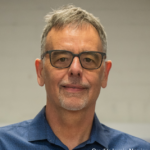
Professor Ron Deibert, (Order of Canada, Order of Ontario, PhD University of British Columbia) is a professor of political science, and the founder and director of the Citizen Lab at the Munk School of Global Affairs & Public Policy, University of Toronto. The Citizen Lab is an interdisciplinary laboratory focusing on research, development, and high-level strategic policy and legal engagement at the intersection of information and communication technologies, human rights, and global security.
As Director of the Citizen Lab, Deibert has overseen as principal investigator and been a contributing author to more than 180 reports covering path breaking research on cyber espionage, commercial spyware, Internet censorship, and human rights.
Chasing Shadows: Chronicles of Counter-Intelligence from the Citizen Lab – For over twenty years, the University of Toronto’s Citizen Lab has pioneered investigations into digital security and human rights—from exposing state cyber espionage to uncovering the global spread of mercenary spyware targeting journalists, activists, and human rights defenders. Drawing from my latest book, Chasing Shadows, I will recount how our mission to conduct “counter-intelligence for civil society” revealed surveillance around the inner circle of murdered Washington Post journalist Jamal Khashoggi and uncovered domestic espionage campaigns across Mexico, Spain, Hungary, Poland, Thailand, El Salvador, and most recently, Italy. As our small team disarmed cyber mercenaries and helped improve the digital security of billions, we, too, became targets—caught in the same sinister crosshairs as those we sought to protect. I will also look ahead to the future of our mission and the rising challenges of AI-enabled subversion, Dark PR, and advertising intelligence, and how the kind of public-interest research the Lab has championed is now under threat from a growing tide of despotism and authoritarianism.
Mar. 30 – Dr. Carolyn Harris – “Powerful Women in History You’ve Never Heard of”
 Dr. Carolyn Harris received her PhD in history from Queen’s University in Kingston and is an instructor at the University of Toronto School of Continuing Studies, receiving the teaching
award in 2016 and 2021. She is the author of three books, Magna Carta and Its Gifts to Canada
(Dundurn 2015), Queenship and Revolution in Early Modern Europe: Henrietta Maria and Marie
Antoinette (Palgrave 2016, recipient of the 2016 Royal Studies Journal book award) and Raising
Royalty: 1000 Years of Royal Parenting (Dundurn 2017) and the co-editor of the English
Consorts: Power, Influence and Dynasty series (2022-2023). Her writing concerning history and
royalty has appeared in numerous publications including Reader’s Digest, Smithsonian
Magazine and BBC History Magazine. She frequently provides royal commentary for the media
including CBC News and the BBC.
Powerful Women in History You’ve Never Heard of – Not all of history’s most powerful women are as well known as Cleopatra or Catherine the Great. We’ll discuss four powerful women were famous in their own time but are sometimes overlooked today including the first female British constitutional monarch, a Russian Empress who popularized ballet, the last Queen of Hawaii and an Icelandic stateswoman who was the first elected female president in history who did not already belong to a political family.